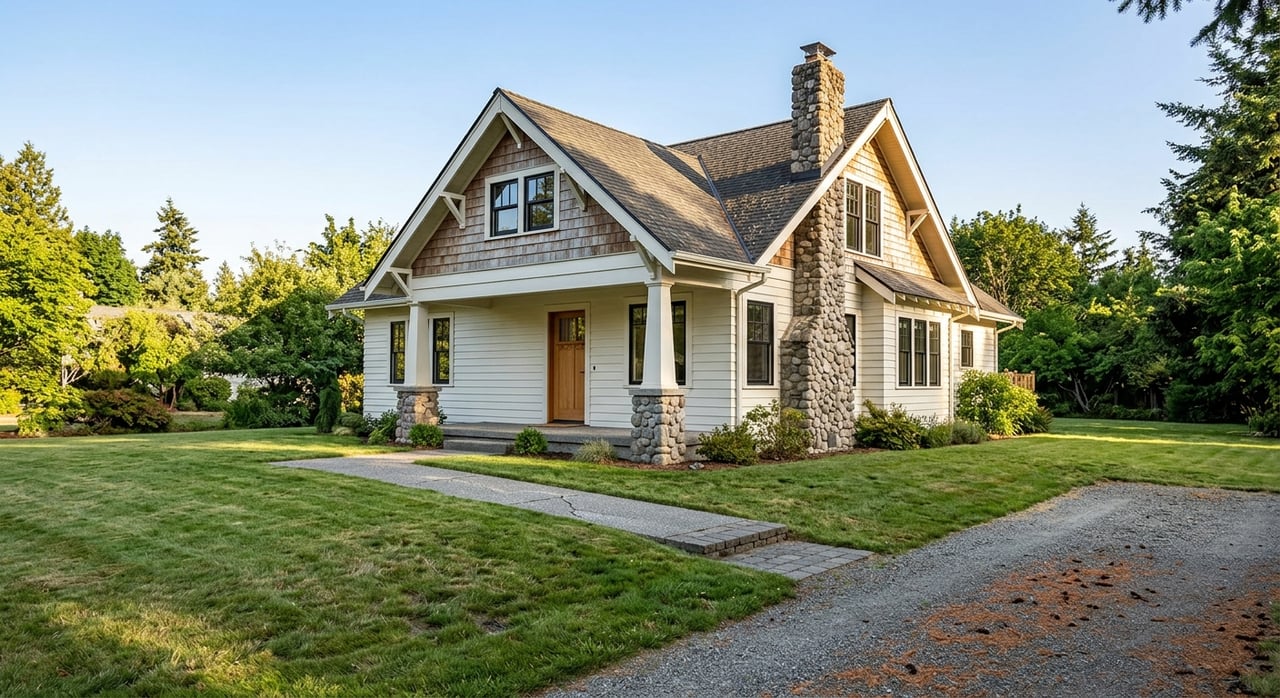
Snoqualmie New Construction vs Resale: Key Tradeoffs
April 16, 2026
April 16, 2026
If you are deciding between a newer build and an older home in Snoqualmie, you are really choosing between two different ways of living. One often offers a more predictable, turn-key experience, while the other can offer deeper character and a stronger connection to the city’s historic roots. In a market where home values are already high, that choice matters. This guide will help you weigh the pros, tradeoffs, and local factors that can shape the right fit for your goals. Let’s dive in.
Snoqualmie has grown quickly over the last decade, with the city’s 2023 housing strategy noting nearly 60% population growth since 2010. The same city materials describe a clear split between the older river-floodplain core and Snoqualmie Ridge, the master-planned west-side community that expanded rapidly after 2000. That local pattern is a big reason the newer-build versus older-home decision feels especially noticeable here.
Today, Snoqualmie’s housing stock is mostly single-family and relatively new. According to the city’s housing strategy, 79.3% of housing units are single-family homes, and many were built between 2000 and 2009. In the 2020-2024 ACS, the city also reported an 85.1% owner-occupied rate and a median owner-occupied home value of $977,200, which reinforces how important it is to think beyond list price and look at total ownership costs.
Many newer homes in Snoqualmie appeal to buyers who want a smoother move-in experience. Because much of the city’s housing stock was built after 2000, newer neighborhoods may be less likely to bring immediate big-ticket replacements like roofing, plumbing, or major systems than older homes, based on Census research on older-home upkeep. That does not mean newer homes are maintenance-free, but it can mean fewer early surprises.
That predictability matters if you want to spend more time settling into the area and less time planning repairs. For many buyers, newer construction supports a lower-friction ownership experience, especially during the first few years.
One of the strongest lifestyle benefits of newer Snoqualmie communities is access to shared open space. The city says Ridge development preserved four acres of land in permanent conservation for every acre developed, and Snoqualmie manages more than 40 parks and about 35 miles of public trails, according to its conservation efforts overview. That kind of access can shape daily life in a meaningful way.
If you picture your ideal home base as one with easy access to trails, views, and outdoor recreation, newer neighborhoods may line up well with that vision. In Snoqualmie, lifestyle is often tied not just to the house itself, but to the landscape around it.
Newer master-planned development usually brings more consistency in lot layout, streetscape, and home style. Snoqualmie’s long-range planning documents note that larger undeveloped residential areas tend to lend themselves to master-planned development, which often results in more standardized neighborhood patterns, according to the city’s 2044 background analysis. Some buyers love that order and clarity.
If you value knowing what the surrounding area will generally look and feel like, that consistency can be a real plus. It can also make resale easier for buyers who prioritize a more predictable neighborhood setting.
In Snoqualmie, newer communities often come with more shared governance. The city’s 2044 background analysis says 86% of the city’s single-family lots are managed by Residential Owners Associations. Washington’s ORIA HOA guide explains that HOAs may manage shared areas, budgets, reserve studies, CC&Rs, and rules related to landscaping, parking, pets, rental limits, and architectural standards.
For some buyers, that structure feels helpful. For others, it can feel limiting. Before you buy a newer home, it is worth reviewing dues, rules, reserve planning, and any design-review requirements so you know how the community operates.
It is easy to assume newer construction means maintenance disappears, but that is not really how ownership works. Even city planning materials note that backbone infrastructure in Snoqualmie Ridge is now over twenty years old and requires ongoing maintenance over time. The same general principle applies to homes.
A newer house may reduce the odds of immediate major replacement, but it still needs regular care. Systems age, materials wear, and community infrastructure also matures. The advantage is often timing and predictability, not the absence of upkeep.
Some buyers want a home that feels unique from the moment they pull up. In newer planned areas, lot patterns and design language can feel more uniform, which is part of what makes these neighborhoods feel orderly and cohesive. Still, if you are drawn to one-off details or a more varied streetscape, that same consistency may feel like a compromise.
This is one of the clearest examples of Snoqualmie’s central tradeoff: predictability versus character. Neither is better in a universal sense. It depends on what feels most like home to you.
Older homes in Snoqualmie are most closely tied to the original core and early additions. The city’s history page notes that Snoqualmie was platted in 1889, grew through railroad and mill-town development, and had additions like Meadowbrook being platted by 1923. That history still shapes the feel of older parts of town today.
For many buyers, this is the heart of the appeal. Older homes can offer a stronger sense of place, especially near historic downtown and the river corridor, where the built environment reflects the city’s earlier development pattern.
Snoqualmie has been intentional about preserving and connecting its historic areas. The city’s Snoqualmie Rivertrail plans describe efforts to link the historic district with Snoqualmie Falls, Borst Lake, and Meadowbrook Farm, while guiding development to complement the established form of historic downtown.
If you are looking for a home that feels rooted in local identity, older areas can offer that in a way newer subdivisions often do not. The appeal is not only architectural. It is also about proximity to long-established parts of the city landscape.
Because the original core developed before modern subdivision standards, older neighborhoods may have more variation in lot shape, setbacks, and overall streetscape. That variation is consistent with the city’s early platting history. For some buyers, that creates a more interesting and less uniform setting.
That can also mean more property-specific quirks, which may be a plus if you enjoy homes with individuality. In Snoqualmie, older homes often attract buyers who want something less standardized and more place-specific.
Character can be rewarding, but it often comes with more upkeep. According to Census data on older-home costs, new owners of older homes spent a median of $3,900 per year on upkeep, while longtime owners spent about $1,500 per year. That gap highlights how the first years of ownership can bring catch-up maintenance.
If you are considering an older home in Snoqualmie, inspections and repair planning matter. Budgeting for roofing, painting, plumbing, and other updates can help you evaluate the real cost of ownership, not just the purchase price.
If a home predates 1978, renovation work may involve extra caution. The EPA’s lead-safe renovation guidance says older homes are more likely to contain lead-based paint, and asbestos-containing materials can also become a concern when disturbed during remodeling.
That does not mean you should avoid older homes. It does mean you should approach updates carefully, ask the right questions, and plan improvements with qualified professionals when needed.
Location matters a great deal in Snoqualmie. The city’s housing strategy says the original core sits in the Snoqualmie River floodplain, and critical areas plus flood-hazard regulations affect about 70% of city land, according to the city housing strategy. For some older homes, that can lead to more property-specific permitting or insurance questions.
This does not apply the same way to every property, but it is a meaningful part of the due diligence process. If you are buying in an older area, it is wise to look closely at site conditions, regulations, and any future renovation plans.
In Snoqualmie, the decision is rarely just about purchase price because the market is expensive across the board. The city’s official data show a median owner-occupied home value of $977,200, median monthly owner costs with a mortgage of $3,626, and median rent of $2,938, according to U.S. Census QuickFacts. In other words, both paths require a thoughtful budget.
A newer home may come with HOA dues and less immediate repair risk. An older home may offer more character but require more money set aside for inspections, updates, and property-specific issues. The better value is usually the one that fits your risk tolerance and lifestyle priorities.
Snoqualmie appears to be a supply-constrained market. The city’s housing strategy cites a 2.9% vacancy rate and notes that rising prices and relatively slow new construction suggest supply has not kept pace with demand. That backdrop supports demand for both newer and older homes, but often for different reasons.
Newer homes may appeal strongly to buyers who want convenience, neighborhood amenities, and a move-in-ready feel. Older homes may continue to attract buyers who value historic context and a more distinctive setting. Resale tends to hinge on condition, location, and how well the home’s strengths outweigh its tradeoffs.
If you value predictability, shared amenities, trails, and fewer immediate repairs, a newer Snoqualmie build may be the better fit. If you value historic character, a more varied setting, and you are comfortable budgeting for updates and detailed due diligence, an older home may be the better match.
In a place like Snoqualmie, where mountain views, river corridors, open space, and neighborhood context all shape daily life, the right choice is usually the one that matches how you want to live. If you want help comparing specific homes and understanding how each property fits your goals, connect with Stacy Hecht for thoughtful, local guidance.
August 20, 2026
August 13, 2026
August 13, 2026
August 6, 2026
July 23, 2026
July 16, 2026
July 9, 2026
July 2, 2026
June 25, 2026
Stacy believes real estate is about people, not just properties. She’s attentive, dependable, and deeply committed to earning your trust. With her by your side, you’ll feel supported every step of the way.
5825 221ST PL SE STE 202 ISSAQUAH WA 98027