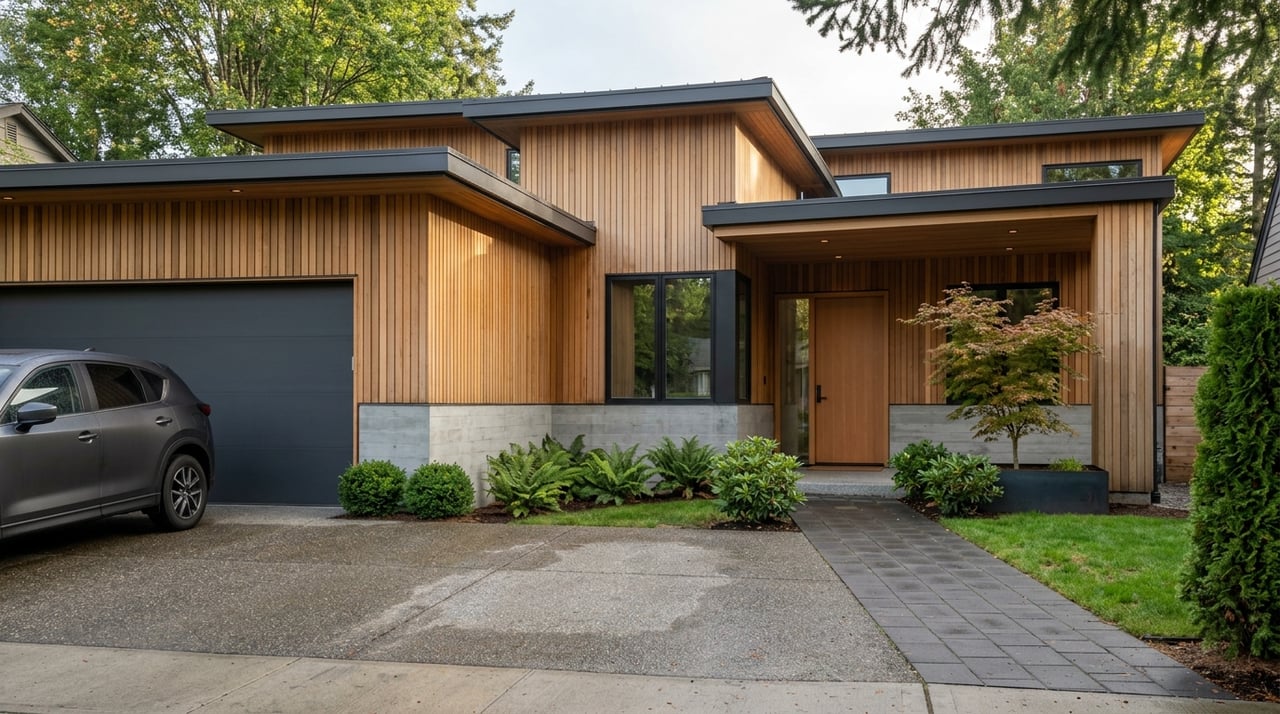
Snoqualmie Commute to Seattle: Time, Costs, and Tradeoffs
April 2, 2026
April 2, 2026
If you love the idea of waking up near trails, mountain views, and a quieter pace, Snoqualmie can feel like a smart trade. The question is what that lifestyle really costs you Monday through Friday when you need to get to Bellevue, Seattle, or somewhere in between. Here’s a practical look at what commuting from Snoqualmie actually feels like, what you can expect to spend in time and transit fares, and where the biggest tradeoffs show up. Let’s dive in.
Snoqualmie sits in a beautiful part of the region, but it is not a plug-and-play commute location. Your daily trip is shaped by the I-90 and SR 18 corridor, which the Washington State Department of Transportation says has become one of the busiest interchange areas in the state as Snoqualmie Valley has grown.
That matters because your commute is not just about miles. It is also about how one key corridor performs, how construction affects flow, and how easily you can pivot when traffic, weather, or weekend travel adds pressure.
For most commuters, the pattern is simple: westbound in the morning, eastbound in the late afternoon or evening. The most predictable pinch points tend to center around the I-90/SR 18 interchange and the middle stretch between Issaquah and Bellevue.
According to WSDOT’s I-90 corridor data, the Issaquah to Bellevue segment averages about 12 minutes in the morning peak and 16 minutes in the evening peak in general-purpose lanes, with reliable travel times of 16 and 21 minutes. Since Snoqualmie is farther east, those numbers are best used as a baseline for the Eastside leg rather than a full door-to-door estimate.
There has been real progress on the corridor. WSDOT reports that the interchange shifted into a diverging-diamond design in July 2025, and SR 18 widened to two lanes in each direction from I-90 to Deep Creek in October 2025.
That said, the work is still not done. WSDOT also says more lane and ramp closures are expected in spring and summer 2026, so your commute may be improved compared with past years, but it may not feel fully settled yet.
If you drive from Snoqualmie, you are buying flexibility. You can leave on your own schedule, make school, childcare, or errand stops, and adjust your route planning around the day.
The tradeoff is variability. A normal day may feel manageable, but delays near the interchange, congestion closer to Issaquah and Bellevue, and corridor-wide slowdowns can make your trip less predictable than a similar commute from communities closer to the Eastside core.
Even if you are not crossing the pass, winter still matters. WSDOT’s winter guidance reminds drivers to prepare for snow and ice, use approved traction tires, and check official alerts and the WSDOT app for changing conditions.
For Snoqualmie commuters, weather can add another layer of uncertainty to an already corridor-dependent drive. If you need to be in the office at a fixed time, that is worth factoring into your home search and your weekly routine.
One detail buyers sometimes miss is that this is not only a weekday commuter corridor. WSDOT notes that the I-90/SR 18 interchange stays busy on travel weekends as well as during weekday peaks.
That may not change your Tuesday morning routine, but it does affect overall lifestyle planning. If you are heading into Bellevue or Seattle for dining, events, or errands, you may still feel corridor pressure outside the standard workweek.
Transit is possible from Snoqualmie, but it usually works best when you think of it as a multi-step connection rather than a one-seat ride. In most cases, you start local, connect to Issaquah or another hub, and then continue by express bus or rail.
That setup can work well for commuters who want to avoid daily driving costs or who value a more stable fare. But it does ask more of you in timing, transfers, and schedule coordination.
Snoqualmie Valley Transportation’s Valley Shuttle is the local feeder for the area. It connects North Bend, Snoqualmie, Fall City, Carnation, and Duvall to Metro bus stops, with a $1 suggested donation.
Its role is practical and important. It helps bridge the gap between Snoqualmie Valley communities and the larger transit system toward Issaquah, Bellevue, Redmond, and Seattle.
If your destination is Bellevue or the Eastside, King County Metro Route 203 is one of the clearest transfer options once you reach Issaquah. Metro says it serves Issaquah Highlands, north Issaquah, Issaquah Transit Center, Newport Way, Factoria, and South Bellevue Station.
It also runs every 30 minutes, seven days a week. That regular schedule helps, but it still means your total commute depends on how well your local connection lines up with the next leg.
For Seattle-bound commuters, Sound Transit Route 554 remains a key option. It serves Issaquah, Eastgate, Mercer Island Park & Ride, and downtown Seattle.
Its current schedule shows first westbound departures from Issaquah at 4:19 a.m., with weekend service starting around 6:22 to 6:25 a.m. That early service window can be useful if you have a downtown schedule, but it still requires getting to the route reliably from Snoqualmie.
The biggest recent change is the Crosslake Connection from Sound Transit, which opened on March 28, 2026, and completed the 2 Line across Lake Washington with Mercer Island and Judkins Park stations. Sound Transit says 1- and 2-Line service now runs roughly 5 a.m. to 1 a.m. Monday through Saturday and 6 a.m. to midnight on Sundays.
Peak trains arrive about every 8 minutes, with 10 to 15 minute service off-peak. In practical terms, that gives Snoqualmie commuters another layer of flexibility once they reach the broader Eastside-Seattle transit network.
Both options can work, but they solve different problems.
| Commute Option | Main Advantage | Main Tradeoff |
|---|---|---|
| Driving | Flexible schedule and direct trip | Traffic, construction, and weather can change your timing |
| Transit | Predictable fare and less wear on your car | Transfers add time and require tighter schedule planning |
If you value control over your departure time, driving will often feel easier. If you want more cost stability and do not mind planning around transfers, transit may be worth a closer look.
Transit fares are one of the more stable parts of the equation. Sound Transit lists adult express fares at $3, $1 for ORCA LIFT or senior and disabled riders, and free for youth 18 and under.
That predictability can be appealing, especially if you are comparing monthly commuting costs against fuel, parking, tolls, and vehicle wear. Even when total travel time varies, the fare side is usually easier to budget.
For many buyers, Snoqualmie is not about shaving every possible minute off the workday. It is about choosing a place where the scenery, outdoor access, and sense of breathing room feel worth the extra planning.
The tradeoff is clear. You often gain space, landscape, and lifestyle, but you usually accept a commute that is longer, more corridor-dependent, more transfer-heavy if you use transit, and more sensitive to weather and ongoing road work than living closer to Bellevue or Seattle.
Snoqualmie can be a strong fit if you:
It may be a tougher fit if you need a highly predictable, low-variance commute every single day. In that case, the lifestyle benefits may still appeal to you, but the routine could feel harder over time.
The best way to evaluate Snoqualmie is to treat the commute as part of the property itself. A home with more room, forested surroundings, and quick access to trails can absolutely be the right move, but only if the transportation side matches your real life.
Before you buy, it helps to test your likely drive times, look at transfer options you would actually use, and think honestly about how much schedule uncertainty you can tolerate. In a place like Snoqualmie, the daily rhythm matters almost as much as the home.
If you are weighing Snoqualmie against Issaquah, Bellevue, or another Eastside location, Stacy Hecht can help you compare not just homes, but the lifestyle and commute tradeoffs that come with them.
September 17, 2026

September 10, 2026
September 3, 2026
August 27, 2026
August 20, 2026
August 13, 2026
August 13, 2026
August 6, 2026
July 23, 2026
Stacy believes real estate is about people, not just properties. She’s attentive, dependable, and deeply committed to earning your trust. With her by your side, you’ll feel supported every step of the way.

5825 221ST PL SE STE 202 ISSAQUAH WA 98027