Private Road Title Review for Sammamish Home Buyers
August 13, 2026
August 13, 2026
The Sammamish Independent reported that the City of Sammamish used the phrase "were never formally opened to the public" in a letter it sent to roughly 400 homeowners in May 2025; the letter turned into a genuine crisis for an entire neighborhood almost overnight. The street outside those homes, the one the city had paved, striped, and maintained for more than two decades, wasn't a public street at all, according to the city's own reading of the record. It looked exactly like every other city street in Sammamish. Legally, it wasn't one.
That gap between how a road looks and what it actually is turns out to matter for a lot more than one neighborhood's mailbox. It's the kind of thing a title report catches and a drive-by never will, and it's worth understanding before you're the one signing closing documents on a street you've never questioned.
The Inglewood neighborhood straddles both sides of Inglewood Hill Road as it approaches East Lake Sammamish Parkway, and it was platted back in 1889. Unincorporated King County maintained those streets for decades before Sammamish incorporated as its own city in 1999. From that point forward, the City of Sammamish kept doing what the county had always done: plowing, patching, and treating Inglewood's roads as its own for 26 years running, a stretch that by 2025 added up to 136 years of the streets functioning as public infrastructure without anyone questioning the paperwork behind them.
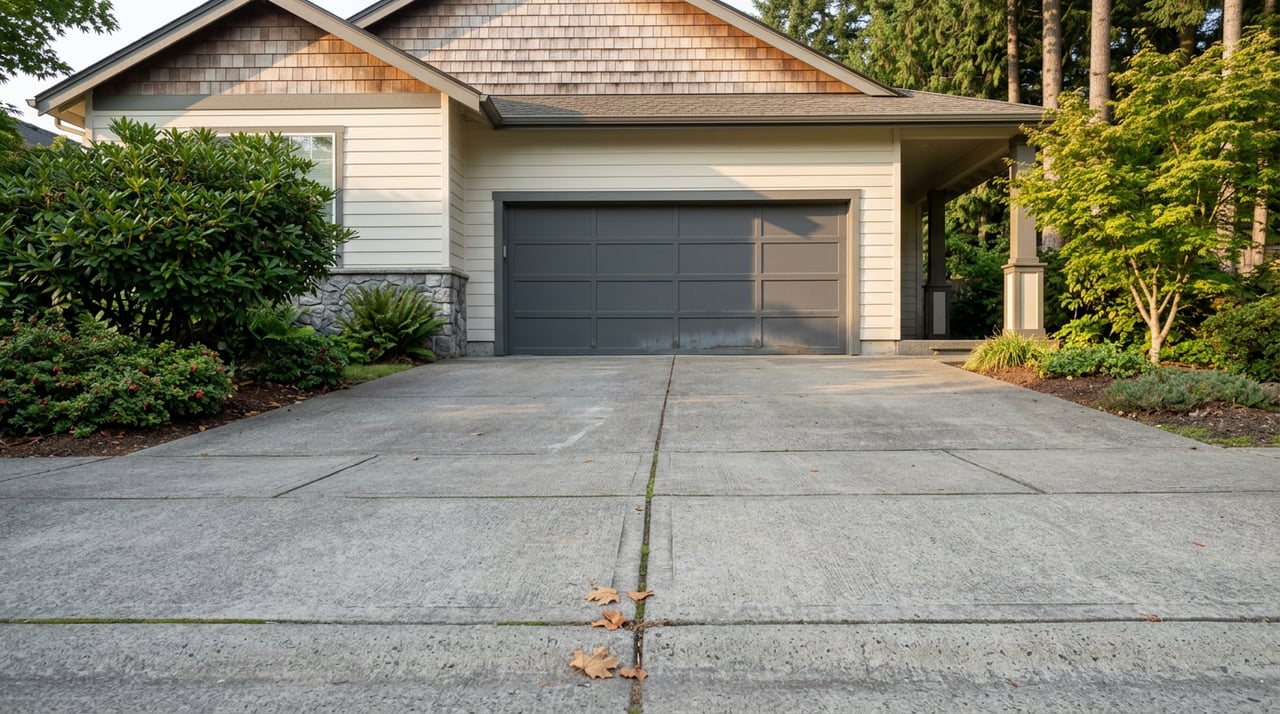
Nobody in Inglewood had reason to think otherwise. There were no gates, no private road signage, no HOA collecting dues for pavement. It functioned, in every visible way, like public infrastructure.
In May 2025, the city's public works director sent a letter explaining that a review of the original plat had turned up a problem: the streets inside Inglewood had never been formally dedicated to the public, which under Washington law meant they were technically private property owned by the adjacent lot owners. The letter was direct about the consequence. "State law prohibits the use of public funds for maintaining private roads," it read, and the city said it would stop maintaining Inglewood's streets by the end of June, giving residents about a month's notice.
The reaction built quickly. A FOX 13 Seattle segment covered the story within weeks. Independent Sammamish coverage followed, questioning whether the city had exhausted its legal options before sending a deadline that tight, and residents began organizing, researching old plat documents, and showing up to public meetings to make their case.
What happened next is the part worth paying attention to if you're thinking about buying here. Residents pushed back with historical documentation. The city held a community meeting on September 11, 2025, and five days later, on September 16, the Sammamish City Council unanimously approved a resolution declaring the historically maintained streets in Inglewood to be public streets after all. The resolution documented the plat's background, the decades of city and county service, and included specific assurances residents had asked for: emergency access guarantees and equal treatment alongside every other public street in Sammamish.
The clearest evidence that the ownership question had actually been settled came a few weeks later, not in a press release but in a construction schedule. In October 2025, the city managed a full repaving of Inglewood Hill Road from 212th Avenue Northeast down to East Lake Sammamish Parkway, a 20-day project. That's not the kind of capital work a city undertakes on a road it considers private. As of the city's own Inglewood Rights of Way page, the next phase of work is collaborating with residents on public works standards specific to the neighborhood's streets, which suggests the big question is closed even as smaller details get worked out.
The Inglewood case is a clean illustration of a distinction that doesn't show up on a walkthrough.
| What you can observe | What the title record actually determines |
|---|---|
| Pavement, curbs, city-style striping | Whether the underlying plat was ever formally dedicated to public use |
| The city has resurfaced or plowed it for years | Whether that service history created a legal right, or just a habit |
| No gate, no "private road" sign | Whether the road is owned by the abutting property owners |
| No HOA billing for road maintenance | Whether there's a written agreement covering who pays if the arrangement changes |
None of the visible cues told Inglewood residents anything true about their legal exposure. The only place that information ever lived was in the original 1889 plat and the chain of records tied to it, which is exactly the kind of document a title company reviews and a buyer touring the neighborhood never sees.
Sammamish incorporated in 1999 by combining a patchwork of existing subdivisions and unincorporated county plats, some recent, some considerably older. That's simply how the city came together. It doesn't mean other neighborhoods have the same paperwork gap Inglewood did, and the city hasn't flagged any others. But it does mean the underlying condition, an older plat where formal public dedication may not have been completed cleanly, is a structural possibility anywhere the street predates modern subdivision review, not a quirk unique to one plat map. If you're weighing an older Sammamish street against a newer platted community, that's one more reason the two aren't apples to apples, alongside the elevation, drainage, and lifestyle differences we've written about when comparing Lake Sammamish living to the Plateau.
None of this requires you to become a title examiner. It requires treating "is this road actually public" as a specific question with a specific, verifiable answer, the same way you'd treat a septic system's certification or a boundary survey. Inglewood residents learned that lesson the hard way, over a single month, with the city's own letter as the wake-up call. A buyer doing routine diligence gets to learn it painlessly instead.
Could my street in Sammamish secretly be private? It can happen on an older street where the road was never formally dedicated, which is what apparently happened in Inglewood.
Is the Inglewood situation fully resolved now? The City Council's September 16, 2025 resolution declared the neighborhood's historically maintained streets public, and the city followed through with a full repaving of Inglewood Hill Road that October. The city has said it's now working with residents on public works standards specific to Inglewood, so some detail work continues even though the ownership question itself was settled.
Can a private road stop me from getting a mortgage in Sammamish? It depends on the loan program and whether a recorded easement or maintenance agreement is already in place, not on how well maintained the road looks. That's a conversation for your lender and title company, but the Inglewood case is a reminder to raise the question early rather than discovering it during underwriting.
What should I actually do differently if I'm buying on an older Sammamish street? Treat the road's legal status as a specific line item in your title review instead of an assumption. Ask in writing, and if there's any ambiguity, give your title company time to research the plat before you're locked into a closing date.
A street's condition can tell you a lot about a neighborhood. It can't tell you who owns it. If you're evaluating a property in Sammamish and want a second set of eyes on the questions that don't show up in listing photos, Pacific NW Houses can walk through what to verify before you write an offer. Explore Pacific Northwest Homes and start with the right questions, not just the right view.
This article is general information, not legal, tax or financial advice. Consult a qualified professional about your situation.
October 22, 2026
October 15, 2026
October 8, 2026
October 1, 2026
September 24, 2026
September 17, 2026

September 10, 2026
September 3, 2026
August 27, 2026
Stacy believes real estate is about people, not just properties. She’s attentive, dependable, and deeply committed to earning your trust. With her by your side, you’ll feel supported every step of the way.
5825 221ST PL SE STE 202 ISSAQUAH WA 98027